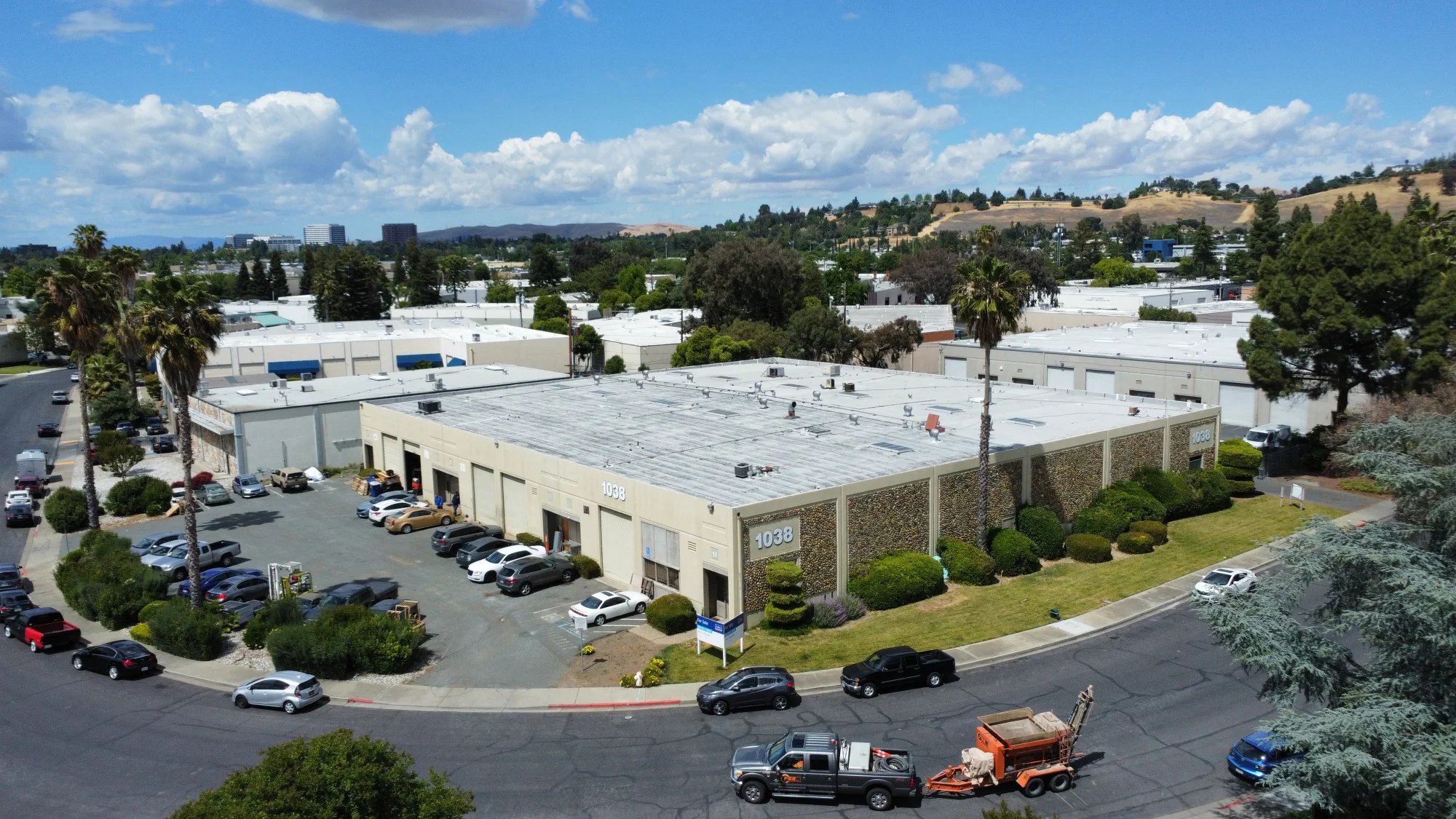
In the world of industrial real estate investing, a fundamental question often arises: should you invest in a single-tenant property with one large, creditworthy tenant, or a multi-tenant property with multiple smaller tenants?
While single-tenant net lease properties have their merits—predictable income, minimal management, and often investment-grade credit—multi-tenant industrial properties have consistently delivered superior risk-adjusted returns over full market cycles. Here's why.
The Multi-Tenant Advantage: Diversification
The most compelling argument for multi-tenant industrial is diversification. With a single-tenant property, your entire income stream depends on one tenant's ability and willingness to pay rent. If that tenant struggles financially, seeks a rent reduction, or vacates at lease expiration, you face 100% income loss overnight.
Multi-tenant properties spread this risk across multiple tenants. A typical 30,000 SF multi-tenant industrial building might have six to ten tenants, each paying rent independently. If one tenant vacates, you lose perhaps 10-15% of your income—a manageable situation—while the remaining tenants continue paying.
6-10
Typical Tenant Count
10-15%
Single Vacancy Impact
90%+
Stabilized Occupancy
"I've seen too many investors learn the hard way that a 'safe' single-tenant property with a creditworthy tenant can become a nightmare when that tenant exercises an early termination option or simply decides not to renew. Multi-tenant diversification is real protection."
Superior Rent Growth Potential
Multi-tenant industrial properties typically deliver stronger rent growth than single-tenant assets for several reasons:
Staggered Lease Expirations
With multiple tenants on different lease terms, you have regular opportunities to mark rents to market. In a rising market, this means capturing rent growth every year rather than waiting for a single lease to expire in five or ten years.
Small Tenant Pricing Power
Small and mid-size industrial tenants—typically businesses occupying 2,000 to 10,000 square feet—have fewer options in most markets. Large distribution centers compete for the same handful of 100,000+ SF tenants, but small-bay space faces less institutional competition, giving landlords more pricing power.
Higher Per-Square-Foot Rents
Small-bay industrial space commands significantly higher rents per square foot than large-format distribution space. While a 200,000 SF distribution center might lease for $0.80/SF NNN, a 5,000 SF bay in the same market might command $1.40/SF NNN—nearly double the rate.
| Factor | Multi-Tenant | Single-Tenant |
|---|---|---|
| Rent per SF (typical) | $1.30-$1.60 NNN | $0.70-$1.00 NNN |
| Annual rent growth | 3-5% annually | Fixed or CPI-based |
| Lease term | 2-5 years | 10-15 years |
| Mark-to-market frequency | Multiple times/year | Once per decade |
| Vacancy risk | Spread across tenants | Concentrated |
| Management intensity | Higher | Lower |
Institutional Capital is Catching On
For decades, institutional investors overlooked multi-tenant industrial in favor of larger, "institutional quality" single-tenant distribution facilities. That's changing rapidly.
Major private equity firms and REITs have increasingly targeted multi-tenant industrial portfolios, recognizing the superior risk-adjusted returns this asset class delivers. This institutional interest has compressed cap rates and validated the investment thesis, but the asset class remains less competitive than trophy single-tenant distribution centers.
Why Institutions Are Interested
- E-commerce tailwind: Last-mile delivery requires smaller facilities close to population centers
- Supply constraints: Zoning restrictions and land costs limit new small-bay development
- Tenant demand: Small business formation drives consistent demand for 2,000-15,000 SF spaces
- Rent growth: Historical rent growth in multi-tenant exceeds large-format industrial
The Management Trade-Off
Multi-tenant industrial does require more active management than single-tenant properties. With multiple tenants, you'll handle more lease renewals, tenant improvements, and day-to-day property management issues.
However, this management intensity creates value in several ways:
- Higher returns: The additional work justifies higher returns—if it were easy, everyone would do it
- Barrier to entry: Less sophisticated investors avoid management-intensive assets, reducing competition
- Value-add opportunities: Active management allows you to improve operations, increase rents, and reduce expenses
- Scalable with property management: Professional property management can handle operations cost-effectively
For investors willing to be slightly more active—or to pay for professional management—the returns more than compensate for the additional effort.
Ideal Multi-Tenant Industrial Characteristics
Not all multi-tenant industrial properties are created equal. When evaluating investments, look for these characteristics:
Location
Proximity to population centers, major transportation routes, and a diverse economic base. Properties near residential areas tend to attract service-oriented tenants with stable demand.
Building Configuration
Flexible bay sizes that can be combined or subdivided, adequate parking ratios (at least 2 spaces per 1,000 SF), drive-in doors for each unit, and ideally some dock-high loading for larger bays.
Tenant Mix
Diversified tenant base across multiple industries—construction trades, distribution, light manufacturing, automotive services, and professional services. Avoid over-concentration in any single industry.
Below-Market Rents
The best acquisitions feature in-place rents below current market rates, providing immediate upside as leases roll. Look for 10-20% spreads to current market rents.
The Bottom Line
Multi-tenant industrial properties offer a compelling combination of income diversification, rent growth potential, and favorable supply-demand dynamics. While they require more active management than single-tenant net lease investments, the superior risk-adjusted returns reward investors who are willing to do the work.
For investors seeking stable, growing income from industrial real estate—particularly in supply-constrained markets like the East Bay—multi-tenant industrial deserves serious consideration.

Interested in Multi-Tenant Industrial?
Let's discuss investment opportunities in the East Bay market and how multi-tenant industrial fits your portfolio.
Contact Us