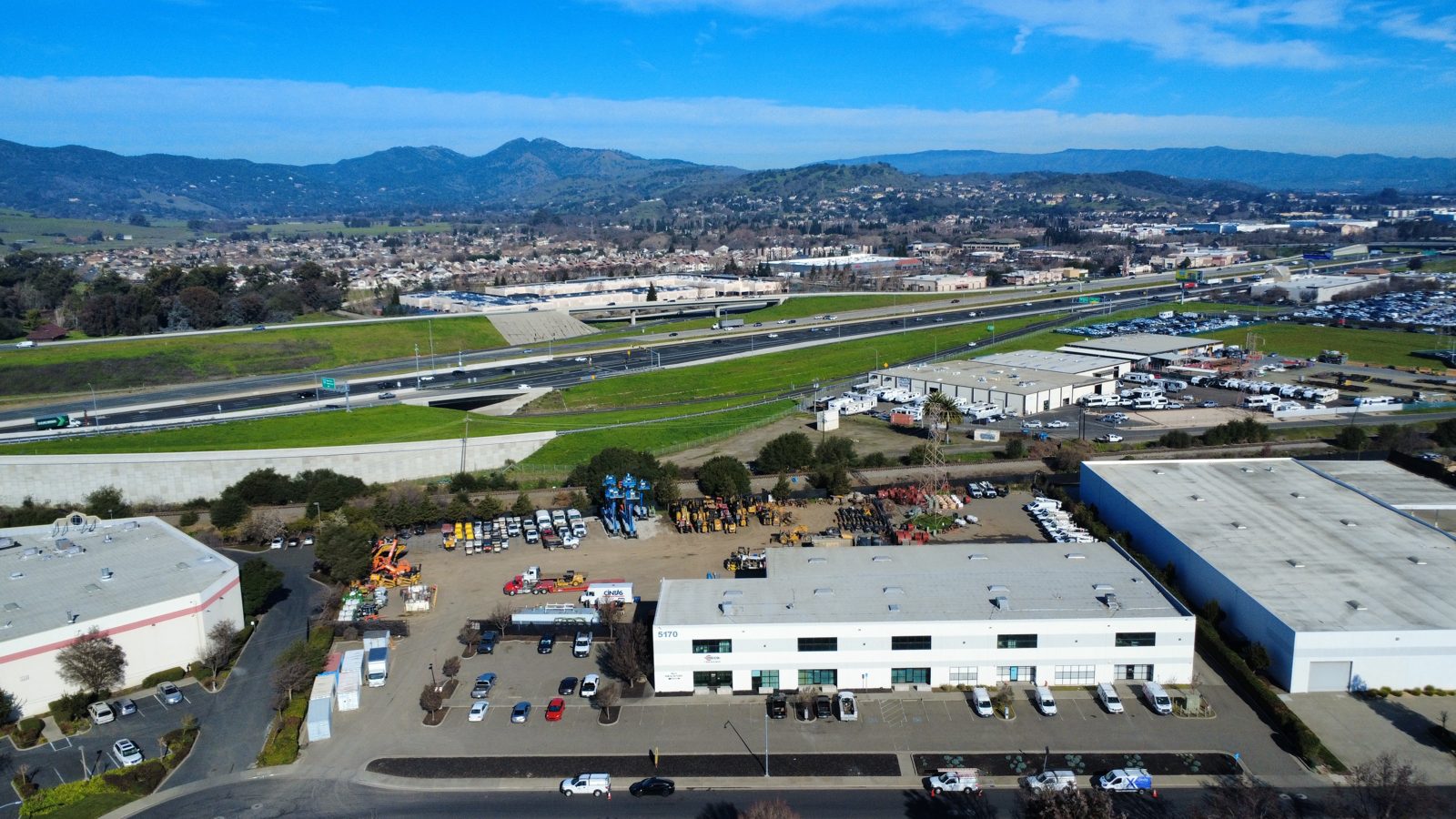
The East Bay industrial market closed 2025 on solid footing, with tight vacancy rates and continued rent growth despite broader economic uncertainty. For property owners, investors, and tenants operating in this market, understanding these trends is essential for making informed decisions in 2026.
This quarterly report examines the key metrics that define the East Bay industrial landscape, from Contra Costa County submarkets like Concord and Walnut Creek to the broader I-680 and I-880 corridors.
Market Overview: Q4 2025 by the Numbers
The East Bay industrial market maintained its position as one of the tightest in Northern California. Overall vacancy rates compressed to 4.2% by year-end, down from 4.8% at the start of 2025. This marks the third consecutive year of declining vacancy, though the pace of compression has slowed compared to the post-pandemic surge.
4.2%
Vacancy Rate
$1.48
Avg Asking Rent/SF NNN
5.9%
YoY Rent Growth
Average asking rents for industrial space reached $1.48 per square foot NNN, representing a 5.9% increase year-over-year. While this growth rate has moderated from the double-digit increases seen in 2022-2023, it still outpaces inflation and most other commercial real estate sectors.
Submarket Performance
Performance varied significantly across East Bay submarkets, with some areas seeing accelerated activity while others experienced more modest growth.
Contra Costa County
Contra Costa County submarkets led the region in leasing velocity during Q4. Concord and Pleasant Hill saw particularly strong activity, driven by demand from distribution, construction trades, and light manufacturing tenants. Vacancy in Concord fell to 3.8%, among the lowest in the broader Bay Area.
Martinez and Antioch also saw increased interest from tenants seeking more affordable options while maintaining proximity to major transportation corridors. Average rents in these submarkets remain 15-20% below Concord, attracting cost-conscious occupiers.
Alameda County
The I-880 corridor from Oakland through Fremont maintained steady fundamentals, though with slightly higher vacancy rates averaging 4.8%. Larger format distribution space saw the most competition, while small-bay multi-tenant properties remained tight with vacancy below 4%.
Investment Sales Activity
Investment sales volume in Q4 totaled approximately $340 million across the East Bay, bringing full-year 2025 volume to $1.15 billion. While this represents a modest decline from 2024's $1.3 billion, transaction activity remained healthy given the interest rate environment.
"Multi-tenant industrial continues to attract both institutional and private capital due to its defensive income characteristics and demonstrated rent growth. We're seeing strong buyer interest for well-located assets with value-add potential."
Cap rates for stabilized multi-tenant industrial assets ranged from 5.75% to 6.50%, depending on location, tenant quality, and lease term. Value-add opportunities with below-market rents traded at cap rates between 5.25% and 5.75%, reflecting buyers' confidence in achieving rent growth.
Notable Q4 Transactions
Concord: 145,000 SF multi-tenant complex sold for $21.5 million (6.1% cap rate)
Fremont: 82,000 SF distribution facility sold for $14.2 million (5.8% cap rate)
Martinez: 65,000 SF industrial portfolio sold for $8.9 million (6.4% cap rate)
Tenant Demand Drivers
Several key trends shaped tenant demand throughout 2025 and are expected to continue into the new year:
- Last-mile distribution: E-commerce fulfillment operations continue seeking spaces between 5,000-20,000 SF close to population centers
- Construction and trades: Contractors, plumbers, electricians, and HVAC companies driving demand for spaces with yard storage and shop areas
- Food and beverage: Cold storage, food production, and beverage distribution expanding throughout the region
- Manufacturing reshoring: Light manufacturing and assembly operations returning to the Bay Area, particularly for technology and medical device sectors
- EV infrastructure: Electric vehicle service, charging infrastructure, and related businesses emerging as a new demand driver
Looking Ahead: 2026 Market Outlook
The East Bay industrial market enters 2026 with strong fundamentals but faces several variables that could influence performance:
Interest rates: The Federal Reserve's monetary policy will continue to impact both investment sales velocity and development feasibility. Most market participants expect rates to remain elevated through at least mid-2026.
Supply pipeline: Limited new construction has been a key factor in the market's tight conditions. With construction costs elevated and financing challenging, the development pipeline remains constrained, which should support continued rent growth.
Economic conditions: While recession concerns have moderated, any significant economic slowdown could impact tenant demand, particularly from smaller businesses.
Implications for Property Owners
For owners of East Bay industrial properties, the current market presents favorable conditions for several strategies:
- Disposition: Cap rates remain attractive for sellers, particularly for stabilized assets with strong in-place rents
- Value-add: Properties with below-market rents offer significant upside potential through lease-up and rent bumps
- Hold: Strong rent growth fundamentals support continued income growth for long-term holders
Implications for Investors
Buyers seeking East Bay industrial exposure should focus on:
- Multi-tenant properties with diversified rent rolls and staggered lease expirations
- Assets with below-market rents offering mark-to-market potential
- Properties with functional obsolescence that can be corrected through capital improvements
- Submarkets with strong transportation access and demographic growth
Key Takeaway
The East Bay industrial market remains one of the most compelling investment opportunities in Northern California commercial real estate. Tight supply, diverse tenant demand, and continued rent growth create a favorable environment for both owners and well-capitalized investors.
Get a Customized Market Analysis
Every property and investment situation is unique. Whether you're considering selling, buying, or simply want to understand your property's current market position, I'm happy to provide a confidential consultation tailored to your specific circumstances.

Ready to Discuss Your Property?
Get a confidential market analysis and learn what your industrial property is worth in today's market.
Contact Us